
Peru, Alpamayo trek and hiking and culture in Colca and Titicaca
The trip consists of two parts that can be done in their entirety or by choosing only one of them.
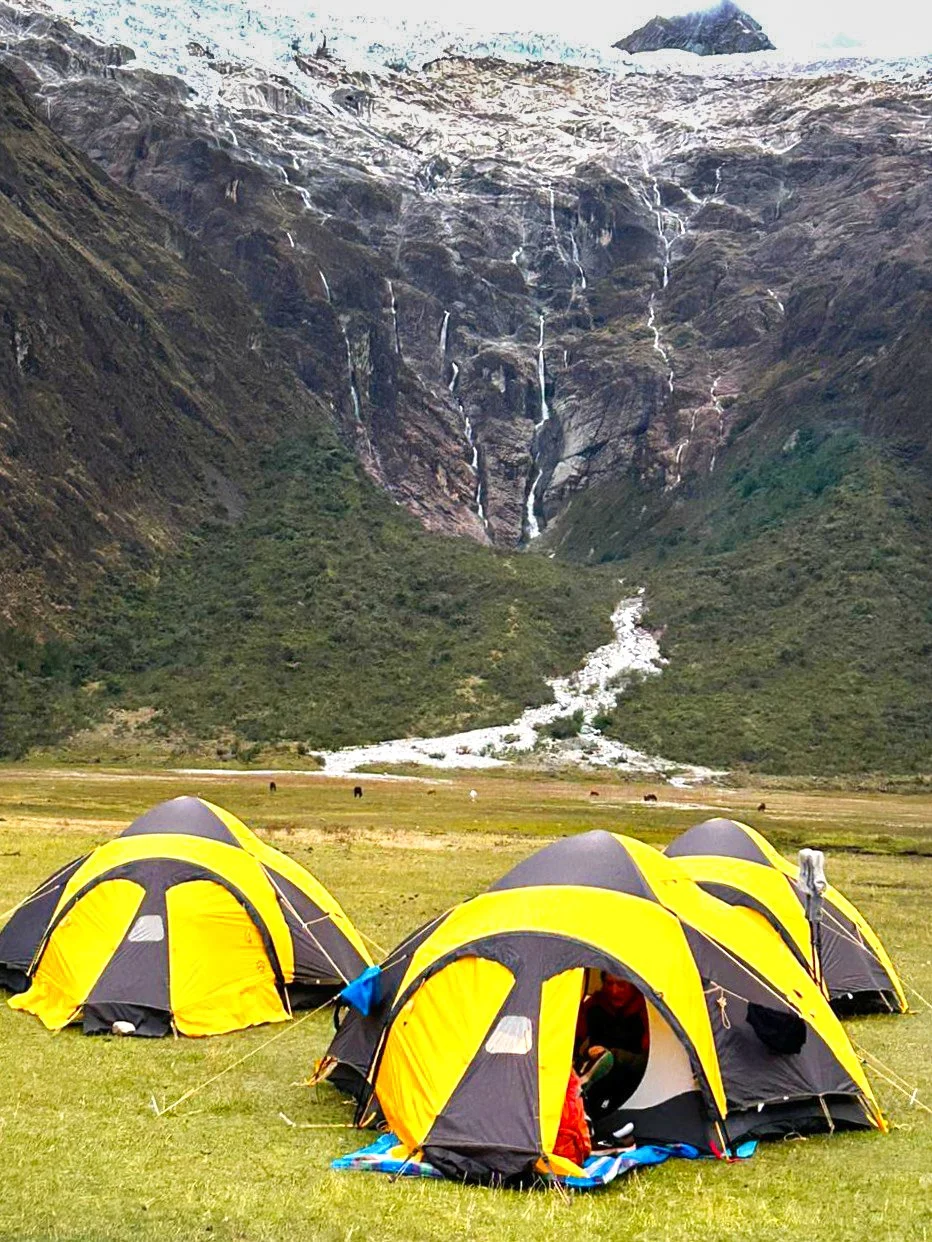
We begin with the magnificent Alpamayo trek, in the heart of the Cordillera Blanca, a route that avoids the more frequented trails. Almost every day crosses a significant pass, as it skirts many of the Cordillera Blanca's great peaks: the triple peaks of Santa Cruz, Chacraraju, Pucajirca, and, of course, Alpamayo, the mythical mountain considered by many to be the most beautiful in the world. Our 9-day trek, preceded by a few days of early acclimatization, is sustained, surprisingly varied, and always on well-maintained trails.
For the second part of our trip, we have selected a tour through southern Peru, from the beautiful colonial city of Arequipa to the Colca Canyon – the second deepest in the world – where we will spend several days hiking and end at Lake Titicaca, enjoying this mythical place with its rich traditional culture, where we will visit some of its communities for an unforgettable cultural immersion…



20 days at destination from €3,325 including domestic flights (Lima-Huaraz, Huaraz-Arequipa, Titicaca-Lima)
From August 2nd to 21st
(currently being confirmed)
Trek difficulty: High. Between 4 and 8 hours of walking per day during
The trek with the passage of several mountain passes at over 4,000 meters high.
A good level of physical fitness and regular practice of a sport are required
resistance.
The pluses of this program
A legendary trek in the Cordillera Blanca with 8 days in the heart of the mountains.
Views of Alpamayo, considered by many to be the most mountain
beautiful in the world.
A visit to Arequipa, one of the best-preserved colonial cities in Peru.
Hiking and local life in the Colca Canyon.
Lake Titicaca, its communities and its traditional life.
Are you a family or group and want to privatize the trip by choosing
the dates?
PROGRAM
Day 1 (August 2): Arrival in Lima, transfer to the hotel and rest day
Airport reception in Lima by our local team and transfer to the hotel. Depending on the arrival time, free time to visit the city.
Day 2: Arrival in Huaraz and free day.
In the morning, flight Lima-Huaraz (1h) and a very relaxed afternoon to acclimatize, as the city is located at an altitude of over 3,000m. Overnight in a hotel.
Day 3: Acclimatization Day
Acclimatization day in Huaraz, leisurely exploring the city to allow for proper acclimatization. Overnight at the hotel.
Day 4: Huaraz / Transfer to Hualcayan Camp (2900m)
Along the way, we visit Yungay, where there is a monument to the thousands of people (20,000) who died in the 1970 earthquake, and then the colorful local market in Caraz. We continue to Hualcayán where we spend the night at our campsite.
Day 5: Hualcayán / Trek to Wishcash Camp (4300m)
We climb steadily, gaining altitude along a zigzag path from Hualcayán to Wishcash, which is located at 4300m.
Wishcash
/ Trekking to Ruina Pampa Camp (3800m)
We start the day with the ascent to Cullicocha at 4850m, and then cross the Osoruri Pass at 4750m. A long descent takes us to the camp at Ruinapampa at 3800m.
7 hours of walking.
Day 7: Ruina Pampa / Trek to Cruze Alpamayo Camp (4150m)
Today we have an easy day to rest from the previous efforts and the altitude. We take an easy walk to reach Cruse Alpamayo and have some free time on the mountain.
Crossing
Alpamayo / Trekking Cara Cara Pass (4830m) / Sajuna Camp (4200m)
Early in the morning we climb to the often windy Cara Cara Pass, at 4830m altitude, from where we have more fantastic views of Alpamayo and the lakes. Later we cross another pass, the Mesapata Pass at 4500m before descending to the camp at the beautiful Sajuna Lake, at 4200m altitude.
6 to 7 hours of walking
Day 9: Sajuna / Trekking Pucajirca Pass (4600m) / Jancapampa Camp (3600m)
From our Sajuna camp we climb to the Pucajirca Pass (4600m) with extraordinary views and descend to the camp in the open valley of Jancapampa at 3600m, a place where many farming families live.
Day 10: Jancapampa / Hike to Laguna Huecrococha Camp (3950m)
.
We pass Tupatupa 4400m and descend to camp next to the small lake Laguna Huecrococha (3950m).
Day 10: Laguna Huecrococha / Alto de Pucaraju Trekking Pass (4650m) / Paria Camp (4200m). We set up camp
at
the Alto de Pucaraju Pass (4650m), offering breathtaking views of Taulliraju Mountain. A steep descent follows, leading to a campsite in the beautiful and tranquil valley of Paria (4250m).
Day 11: Paria / Huaripampa Valley Trek / Cattle Herding / Return to Huaraz.
Initially, we hike easily through the Huaripampa Valley, passing through agricultural settlements and villages towards Colcabamba, where we bid farewell to most of the local team. From there, a vehicle transfer takes us back to Huaraz. Overnight at a hotel in Huaraz.
4 hours of walking.
Day 12 Huaraz - Flight to Arequipa (2300 m) and city visit.
Early morning departure and transfer to the airport for your flight to Arequipa, the "White City" of Peru. Nestled between the desert and the Andes Mountains, at the foot of the Misti volcano (5,820 m), the city experienced extraordinary prosperity thanks to the silver trade from Potosí, Bolivia, during the 17th and 19th centuries. The alpaca wool trade further boosted this flourishing economy, as evidenced by the countless churches, stately homes ("casonas"), and convents. We will explore the San Camilo Market, enjoy a fresh fruit juice, and continue our tour with a visit to the Plaza de Armas and the magnificent Santa Catalina Monastery. The latter was built using "silar," the white volcanic rock that gives the city its name. Overnight at a hotel.
Day 13 Arequipa (2300 m) - Volcano Viewpoint (4900 m) - Colca Canyon (3600 m)
Another early morning departure. We cross the Salinas y Aguada Blanca National Reserve, home to vicuñas, alpacas, llamas, and wild sheep that share the sparse vegetation. We stop at the Mirador de Volcanes pass (4900 m), which offers an exceptional panoramic view of the Ampato (6400 m), Sabancaya (5976 m), and Huallca Huallca (6025 m) volcanoes. Leaving these vast landscapes behind, we arrive in Chivay (3600 m) for lunch. Chivay is the capital of the Caylloma province and of the Colca Canyon, a gigantic chasm in the heart of the Altiplano. In the afternoon, we depart for Coporaque, the starting point for a hike to the Uyo Uyo archaeological site and the Yanque natural hot springs, where we enjoy a relaxing soak before arriving at the hotel.
Day 14: Hiking in the Colca
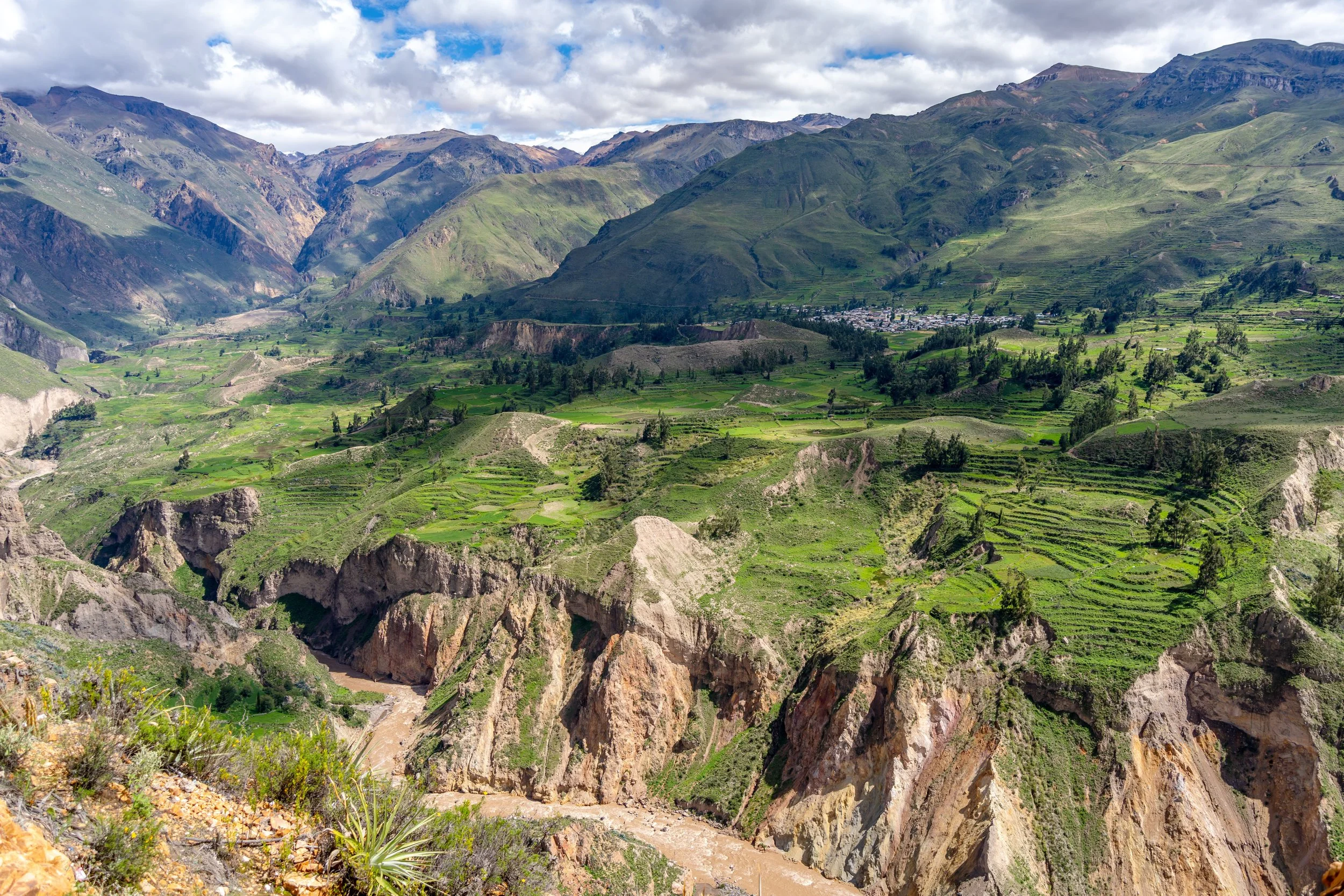
The second deepest canyon on the planet is crisscrossed by trails that allow its inhabitants access to small farming villages and the terraced fields that define part of the canyon's landscape. With the Colca River shimmering 2,500 meters below, we travel along paths that reveal landscapes and people—farmers descended from the Collagua people—until we reach a small village in Sangalle where our family home is located, the place where we will stay tonight.
5 hours of walking.
Day 15. Second day of hiking in the Colca Canyon
We continued exploring this iconic place on foot and spent the morning climbing towards Cabanaconde, the final point of the route.
Night in a hotel.
4 hours of walking
Day 16. Colca Canyon - Condor Cross - Lake Titicaca (3825 m)
Early in the morning, we'll depart to admire the condors soaring above the gigantic Colca Canyon. We'll hike from the Cruz del Cóndor viewpoint to Salto del Cura waterfall, enjoying exceptional views of the canyon and its snow-capped peaks. Then we'll drive to Juliaca (3900 m), the commercial capital and home to the largest alpaca wool market on the Altiplano, before taking a dirt road to the Capachica Peninsula. We'll arrive at the Llachón Peninsula (3825 m), on the shores of the famous and mythical Lake Titicaca, which stretches for over 180 km, and settle into our homestay. The drive takes approximately 7 hours.
1 hour walk
Day 17. Lake Titicaca: Uros Islands - Titino - Taquile Island (3900 m) - Llachón (3825 m)
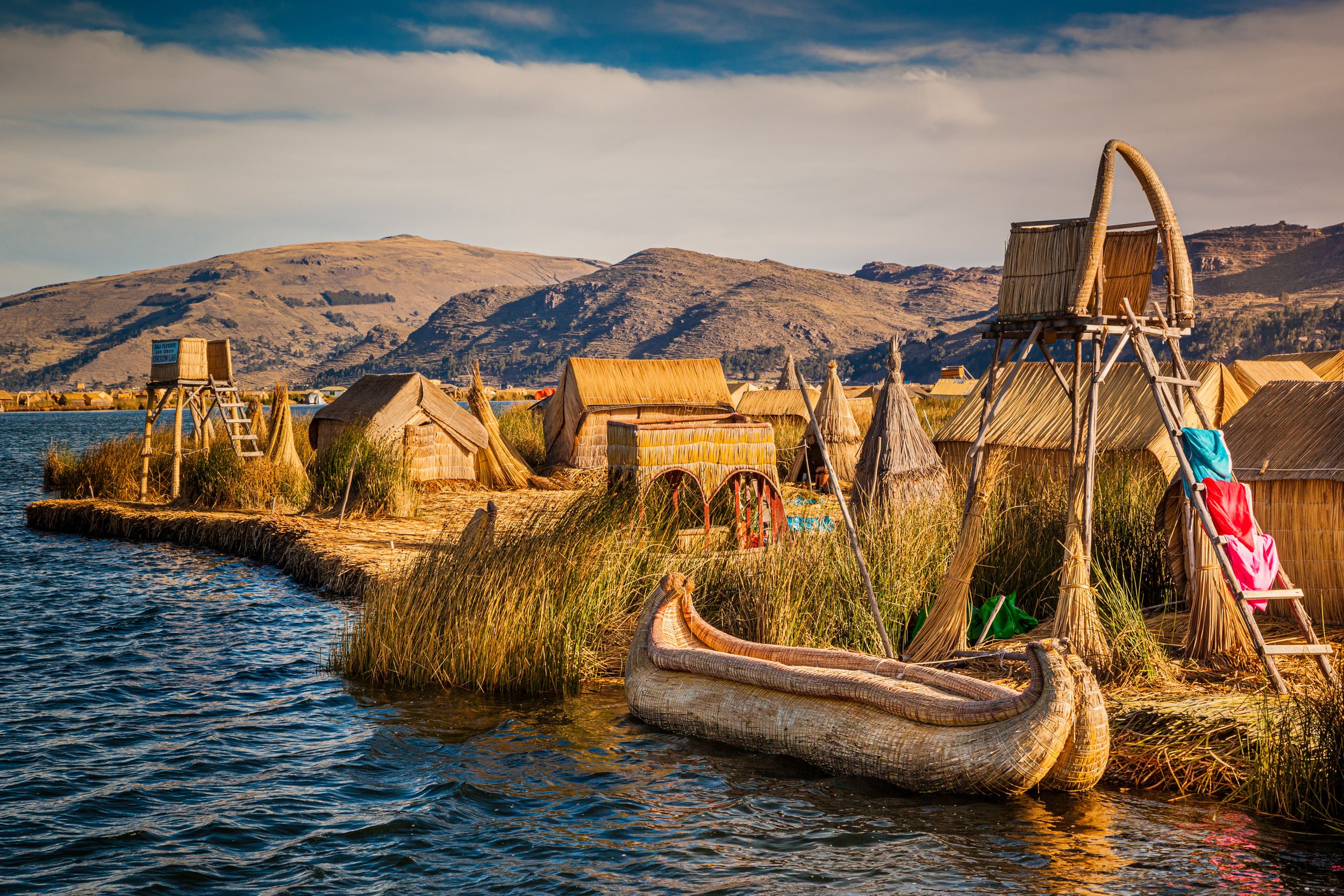
Boat trip to Taquile Island. We stop at the Uros Titino Islands, where the Aymara people build their homes on giant totora reed boats tied to stakes. These islands are striking in their size, ranging from a few dozen to several hundred square meters. The inhabitants explain their way of life, which blends tradition and modernity. We continue sailing to Taquile Island (3900 m), which we explore on foot. Its inhabitants, dressed in bright clothing, live in an extraordinary natural environment, facing the peaks of the Bolivian Cordillera Real. We return to our hosts' home in Llachón at the end of the day and have dinner with a local family.
1 hour walk
Boat trip, 3.5 to 4 hours
Day 18. Luquina Community: A Day of Togetherness
In the morning, in small groups of 2 to 4 people, we will depart to visit local families and experience their way of life for a few hours, helping them with daily tasks. Activities may vary depending on the time of year: fishing, herding, weaving, cooking, etc.
The second part of the day will be dedicated to exploring the peninsula on foot, visiting its traditional villages before ascending to the highest point. From there, a breathtaking view unfolds across Lake Titicaca and the vastness of its surrounding landscapes. Second night in Llachón
3 hours of walking
Day 19. Kayaking on Lake Titicaca. Puno
We spent the morning exploring the lake and its extraordinary light in kayaks that are easy to handle and require no prior experience. Calmly skimming the water's surface, we discovered the landscapes and met the local people. In the afternoon, we traveled to Puno. There was time to visit this city, the capital of the Peruvian Titicaca region and also a hub of folklore, thanks to its many music and dance festivals. Overnight at the hotel.
between 2 and 3 hours of kayaking.
Day 20. Flight to Lima and international flight to Europe
After a one-hour transfer to Juliaca airport, we flew to Lima. From Lima, we took an international flight back home.
Important information
Accommodation
Three-star hotel in Lima
Three-star hotel in Huaraz
Tent camping during the trek in Cordillera Blanca.
Family homes and hotels in Colca and Titicaca.
Meals
Peruvian cuisine is among the best in the world. During our trip, we'll sample countless dishes prepared by our cooks during the trek and hike, as well as by the families who will host us in their homes. Several evenings spent in restaurants will also allow us to explore Peruvian cuisine.
Personal equipment
Adapted for trekking at altitudes of almost 5,000 meters.
Travel bag. 35L backpack. Hiking boots. Sleeping bag (comfort temperature -15ºC). Clothing suitable for high-altitude mountaineering. Personal first-aid kit. You will receive a complete list of personal equipment tailored to this trip upon registration. Sleeping bags can be rented from Exploramunt.
Flights
The three domestic flights in Peru are included in the price and include both checked and carry-on baggage. If you wish, we can also arrange international flights (please inquire at the time of booking) or advise you on finding the most suitable option.
Features and information about the Alpamayo trek (Cordillera Blanca)
We will be accompanied by a qualified and experienced trekking guide from the Cordillera Blanca, a cook, a mule driver and mules, and assistants for larger groups. The mules carry the main luggage and all the food, tents, and equipment. We only carry our small daypacks.
Physical and technical difficulty of the trek
PHYSICAL LEVEL: medium/high
The route follows good trails and passes several mountain passes at over 4,000 meters (the highest at 4,830m).
Good physical condition is recommended. Practice an endurance sport for at least 3 months before the trek.
This is an 8-day route, with stages averaging 5 to 7 hours of walking per day.
The world of high peaks, acclimatization and altitude sickness
Altitude, starting at 3,000 meters for some people, can be the biggest challenge when climbing a peak or trekking. The trip we propose is designed to allow for gradual acclimatization. Even so, ibuprofen and/or acetoacetamide can aid in acclimatization and reduce some of the associated symptoms. Consult your doctor.
Health and prevention, vaccines
There are no mandatory vaccinations for entry into the country (unless the traveler has recently been in a country with yellow fever), but it is advisable to be up-to-date on routine vaccinations. It is also advisable to consult your doctor before traveling, especially if you have any chronic illness.
Travel documents and formalities
Passport valid for 6 months after the return date. Free visa for stays of less than 90 days.
It is recommended to consult the website of the Ministry of Foreign Affairs:
Group size
Between 5 and 12 people.
What do we carry in our backpack during the day
During activities and hikes, we only carry a backpack with our gear for the day and our picnic lunch. The rest (our sleeping bag) is transported by car or by donkeys in the case of trekking.
Insurance
Insurance is not included in the price but is mandatory for the trip. Exploramunt does not offer insurance, but you will find everything you need on the website (we can also advise you). It is recommended to have insurance that covers accidents and mountain rescues—make sure it covers the country, the altitude (in this case, over 4,000m), and helicopter rescue. Some federation insurance policies cover this. You should also have travel and cancellation insurance (it can be the same or a different policy). Some credit cards, such as Visa Gold, include travel insurance if you pay for the trip with them. In our case, you can pay for the trip by card through a secure bank link (you can request this payment method when registering).
Tips
At the end of a trip, it's customary to show appreciation by tipping the team: guides, drivers, cooks, porters, or muleteers. The amount of the tip depends on your satisfaction, the size of your group, and the size of the local team. These guidelines are not mandatory and are not considered a salary, but they are important for the local teams. As a general rule, you can estimate an expense of €50 per week per participant for hostel-based excursions and €70-80 per week per participant for tented excursions. However, this can increase on some treks or expeditions where the local team is very large (a classic example is Kilimanjaro, where a tip of €150-200 per client is typical for a week-long climb).
Guides and support
Exploramunt local team, experienced local trekking guides, culture, cook on the trek…
Prices and conditions
Price: from €3,325 per person (3 domestic flights -Peru- included)
Single room supplement in hotels: € 189 (this service cannot be guaranteed on treks and in family homes).
Small group supplement (between 5 and 7 people): €325 pp
Small group supplement (8 or 9 people): €195 pp
Included in the price: All domestic flights in Peru (3 flights). All ground transfers in Peru as explained in the program. Boat trips on Lake Titicaca. Kayaking on Lake Titicaca. Camping equipment (except sleeping bag). Full board accommodation every day except lunch and dinner on day 1 in Lima. Local guide and equipment as described in the program and in Important Information. Entrance to Colca National Park. VAT and tourist taxes.
Not included in the price: International flights (please inquire*). Showers, Wi-Fi, and battery charging at some establishments (if available, at an additional cost, approximately €2-5). Excess baggage fees on flights. Lunches and dinners in Lima. Personal equipment (sleeping bag). Gratuities. Drinks. Insurance. Entrance fee to Cordillera Blanca National Park (approximately 150 soles, about €38). Any service not explicitly described in the program or important information.
Terms of payment
A 50% deposit is required upon registration, with the remaining balance due no later than one month before departure. Payment can be made by bank transfer or credit/debit card (please request payment options at the time of registration). Some cards may incur a fee. Please note that in case of cancellation, a portion of the price is non-refundable (flights and some local services), so we recommend purchasing cancellation insurance at the time of registration.
*International flights
Exploramunt can advise you on the best options or directly manage the purchase of these flights. Please contact us at the time of registration.
