Patagonia, expedition back to the continental ice and ascent of Gorra Blanca peak
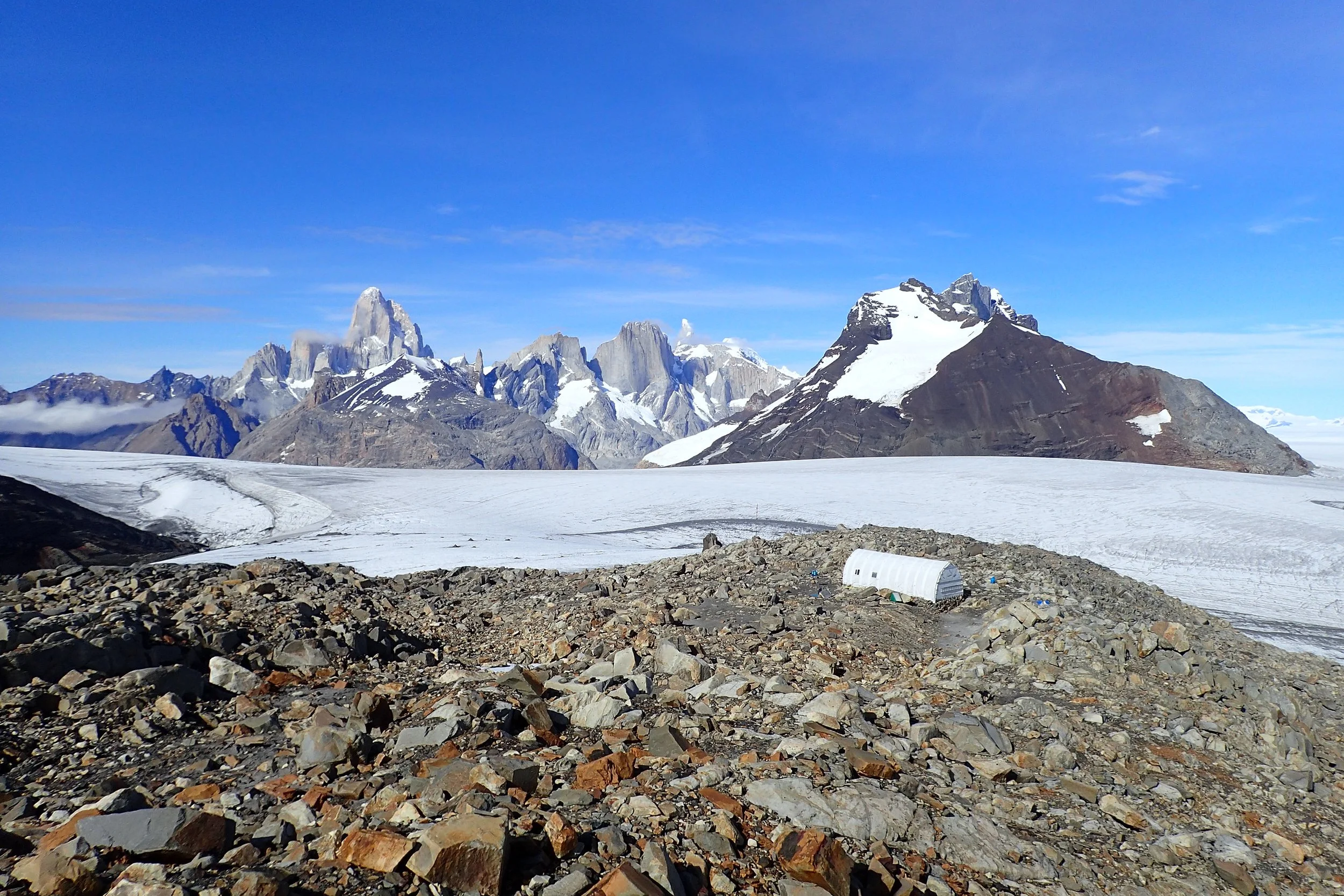
In Argentine Patagonia lies a legendary mountain range, its beauty renowned among climbers and hikers worldwide. This is Fitz Roy and the surrounding peaks, granite spires of spectacular architecture, where some of the most remarkable mountaineering feats in history have taken place. On this trip, we propose a circuit of the range, traversing its wildest section: the continental ice sheet and its vast expanse of glaciers, the third largest in the world after Antarctica and Greenland. To make the experience even more complete, we will ascend Cerro Gorra Blanca, a climb that will offer unparalleled views of the continental ice sheet and the Fitz Roy mountain range.
To undertake this expedition, although we will have the help of some porters, we will need to carry a backpack of approximately 20 kg and be able to hike for several hours in high-altitude terrain using crampons and assisting with setting up tents. Prior experience in basic snow and ice travel techniques is always recommended. Furthermore, the weather conditions in Patagonia are not just a myth and often add more fatigue and intensity to this trek.
In a small group (up to 9 people), with the help of local high mountain guides and an Exploramunt guide, we will carry out this activity in 9 days in the mountains.


14 days from €3,990 per person (domestic flights included, international flights not included)
From March 14 to 27, 2027
Difficulty: Mountaineering. Progression over snow and ice. Between 7 and 10 hours of walking per day.
A very good level of physical fitness is required. (Please contact us to assess your fitness level.)
The pluses of this program
An expedition to a remote location in Patagonia.
The ascent of the 2,920-meter Gorra Blanca hill
The tour through the glaciers of the continental ice sheet
A team of experienced professional high mountain guides.
The help of some porters to lighten the load of our backpacks a little
A small group
Are you a family or group and want to privatize the trip by choosing
the dates?
PROGRAM
Day 1 (March 14) · Arrival in Buenos Aires,
Arrival at Buenos Aires airport and welcome by our guide. Transfer to the hotel and, depending on the arrival time, free time to visit the city. Welcome dinner.
Night in a hotel in Buenos Aires
Day 2 · Flight Buenos Aires-Calafate (Argentina).
In the morning, transfer to the airport and flight to El Calafate (included). Transfer by public bus to the remote village of El Chaltén. Here, in Argentina's youngest town (1985), located at the foot of Mount Fitz Roy and Mount Torre, we'll check your equipment, make sure you have everything, and take care of any last-minute details. We'll have a short talk with our local guide who will explain the characteristics of the region, the Patagonian Ice Field, and the most important details to keep in mind during the expedition. Then we'll meet for a group dinner. Roast lamb with a good wine, how about that?
Day 3. Stage 1, from civilization to the electric lake.
Private ground transfer to the bridge over the Río Eléctrico, 15 km northwest of El Chaltén, the starting point of our first day of trekking to the base of the Marconi Glacier. The first two hours of hiking follow a well-marked trail upstream along the Río Eléctrico through a lush forest of Ñire and Lenga trees. At the edge of the vegetation, we will reach the Piedra del Fraile campsite, our last contact with civilization until we arrive back in El Chaltén at the end of the trek. There, we will leave the vegetation behind, and a wide glacial valley will open up before us, revealing the Treinta Aniversario, Marconi Norte, and Marconi Sur peaks. From Piedra del Fraile, we will skirt the southern shore of Lago Eléctrico, crossing glacial moraines and rock formations eroded and abandoned by the Marconi Glacier less than 70 years ago. Less than two hours away, we'll have to ford the Pollone River, from where we can see one of the highest faces of Mount Fitz Roy (Northwest). After the mandatory ford, another hour's walk will take us to the western shore of Lake Eléctrico, where we'll set up camp on its shore, just 20 minutes from the Marconi Glacier, which we can visit after a well-deserved rest.
Full board. 6 hours of hiking. Distance: 12 km. Elevation gain: 80 meters
Day 4, Stage 2. Marconi Pass, Marconi Glacier.
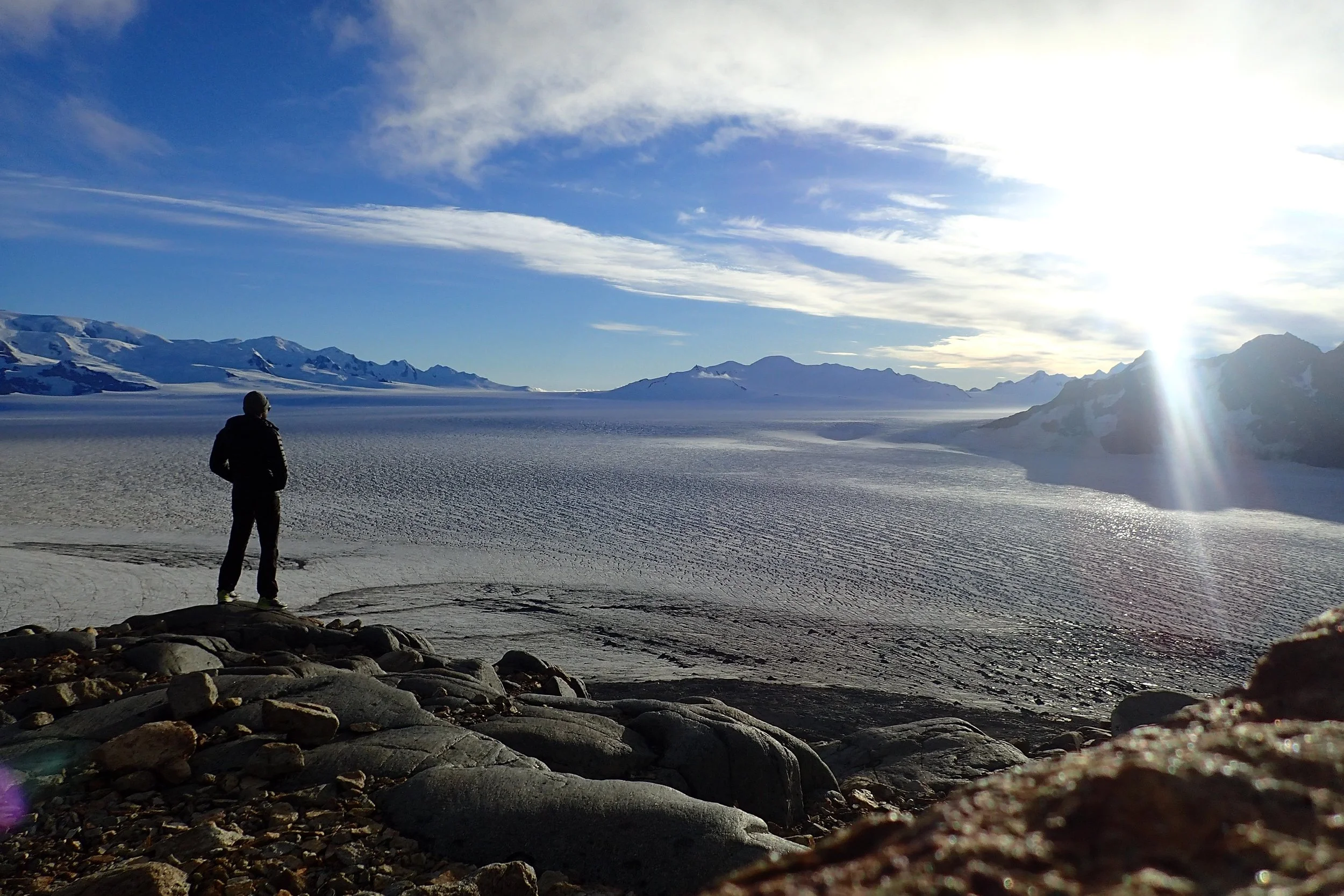
Today is the key day of our expedition. The Marconi Glacier and Pass are one of the access points to the Southern Patagonian Ice Field. Most of the winds and weather conditions, whether good or bad, come from the west or north, and upon reaching the pass and valley, they accelerate due to the bottleneck effect. Depending on the weather, we'll get up early, have breakfast, break camp, and set off. Depending on the ice conditions, we'll take one route or another to reach the Marconi Glacier. If we take the route towards Laguna de los 14, we'll cross a fairly fast-flowing river using a zip line. This will be decided by the guide. Once on the Marconi Glacier, we'll initially encounter a combination of bare ice and rock. We reach the base of the steep slope, put on our harnesses and crampons, and rope up. After a 35- to 40-degree section of snow and/or ice, plus another hour of hiking, we reach the Marconi Pass. The landscape of the world's third largest freshwater ice mass takes our breath away. We admire the Kolliker, Gaea, and Mariano Moreno mountain ranges and the Lautaro Volcano in front of us. From the campsite, we'll be able to watch the sunset and sunrise over the faces of Fitz Roy, the Super Canaleta, Cerro Pier Giorgio, and Gorra Blanca. We eat, hydrate, and go to sleep.
7-9hours of hiking. Distance: 10 km. Elevation gain: 900 meters.
Day 5. Summit of Cerro Gorra Blanca (2,920m)
Summit day! Light backpack, just what we need for the day. Our goal: Summit of Cerro Gorra Blanca. We make our way through seracs and crevasses, always aiming for the west ridge. Once on the ridge, we continue east, zigzagging around snow mushrooms (an interesting formation created by wind and snow, similar to the mushroom on Cerro Torre). The last few meters to the summit will be fixed with ropes by our guide. If the weather is good, the scenery is incredible. We descend leisurely back to camp at the pass. 1200 meters of elevation gain, 8 to 12 hours depending on snow conditions and the group's fitness. If the weather is very severe, we might consider climbing Cerro Marconi Norte.
Day 6. Rest day or second chance to the summit of Cerro Gorra Blanca.
A welcome and well-deserved rest. We can also use this day as a backup in case of very severe weather.
Day 7. Marconi Pass, Circus of the Altars
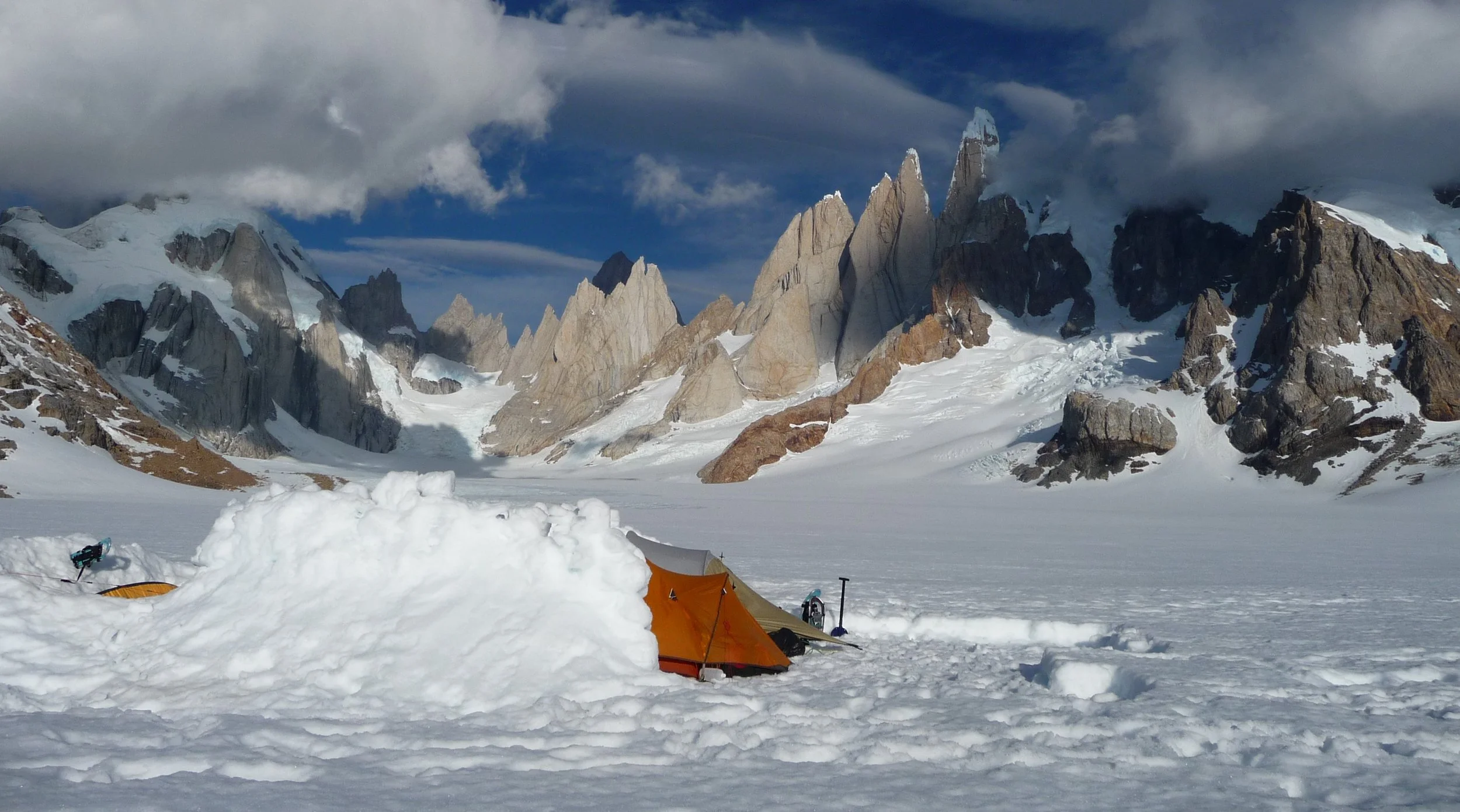
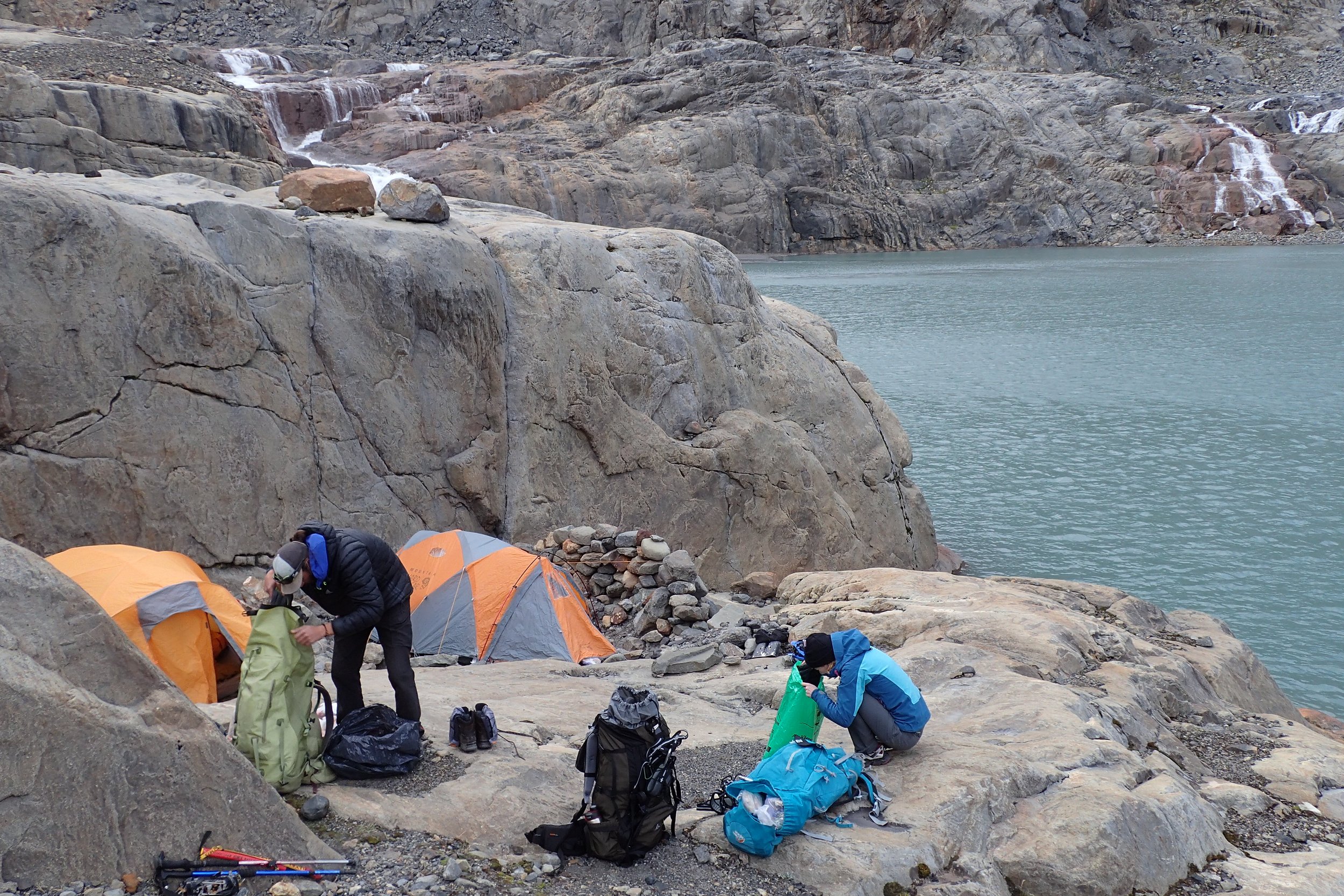
Everything packed and ready to go. Our course: South, our destination: Circo de los Altares (a bowl formed by the western faces of Cerro Torre and its surrounding peaks). We'll camp at the entrance to the cirque. Only those who make it this far and are lucky enough to have good weather can witness this indescribable landscape. We'll spend some time building ice walls to protect our camp from the prevailing north and west winds.
Day 8 Exploration of the Circus of the Altars
Depending on the weather and the group's physical condition, we might stay another night at this camp. We'll make the most of the day and, with only a small backpack, hike into the very heart of the Circo de los Altares. We'll reach the base of Filo Rosso, where Casimiro Ferrari, along with others, set up camp to ascend the west face of Cerro Torre for the first time in 1974. We'll return to our camp around mid-afternoon.
Day 9. Circo de los Atares to Refugio Paso del Viento
A full day of hiking lies ahead. Today we'll be trekking on snow, ice, rock, and grass! We depart from the Circo de los Glaciares towards the Paso del Viento Refuge, a beautiful metal shelter used by the National Institute of Continental Ice of Patagonia for its research. At Laguna de los Esquíes, we climb onto the lateral moraines. We continue our trek past the Ferrari bivouac (a possible intermediate camp if the group is very fatigued). The Mascarello mountain range, located within the strict reserve of Los Glaciares National Park, accompanies us throughout the day. An hour more and we reach the refuge. We'll use it only for cooking and eating in case of bad weather. We'll sleep in our tents. Distance: 20 km. Elevation gain/loss: 250 m (250 m) by the end of the day.
Day 10. Paso del Viento to Laguna del Toro Camp
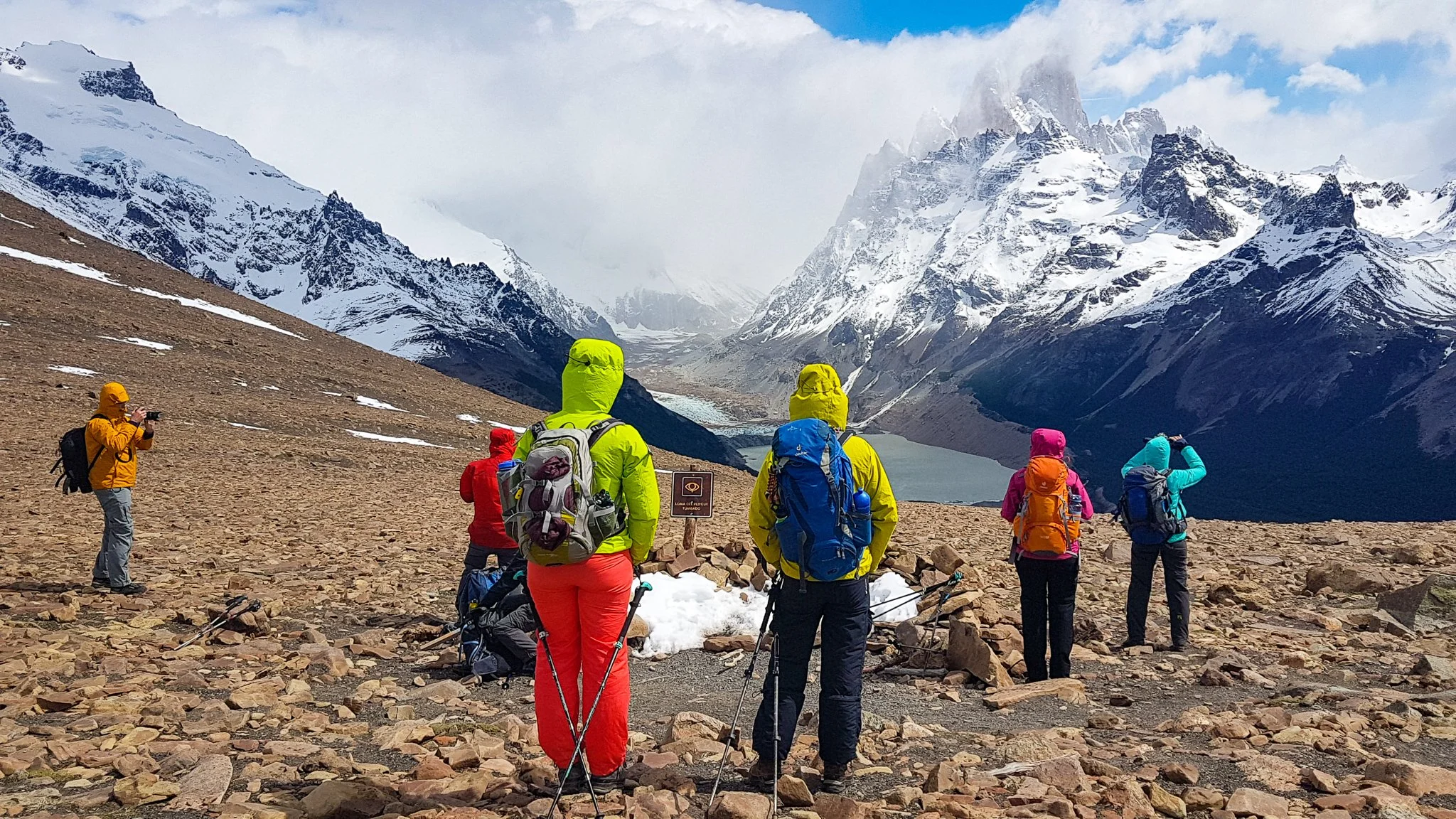
After a hearty breakfast, we set off towards El Paso del Viento (Wind Pass). We retraced only part of the trail to the pass. Upon reaching El Paso del Viento, the sight of the continental ice field will take your breath away—one of the most impressive views in Patagonia. After capturing this beautiful landscape with our cameras and in our minds, we began our descent to Laguna Toro, a 900-meter drop over varied terrain: scree, grass, glacier, and depending on the season, perhaps even snow. The scenery is breathtaking: the upper and lower Túnel Glaciers and the entire Túnel River valley. We crossed the Túnel River, either wading or using the zip line (depending on conditions and the guide's decision). About half an hour later, we arrived at the Laguna Toro Camp, where we spent the night. Distance: 5 km. Elevation gain: 400 meters; Elevation loss: 900 meters.
Day 11. Arrival at El Chaltén!
Return to El Chaltén following the Túnel River until we begin our 500-meter ascent to the Pampa de las Carretas. We'll pass through a large area of burned forest, steeped in history and legend. After completing our climb, we'll have lunch while enjoying the views of these beautiful granite spires. Finally, we'll continue our descent back to El Chaltén, which we can admire from above on the last stretch. A short stop at the Los Glaciares National Park Visitor Center, and then on to our lodge/hotel/hostel for a well-deserved shower. We'll meet for dinner. Distance: 14 km. Elevation gain/loss: 500 m.
Days 12 and 13
Two days' buffer in case of bad weather at the start of the expedition, or two days of trekking if we've been able to complete the program as planned. On the afternoon of the 13th, bus to Calafate and overnight stay in Calafate.
RETURN
Day 14· Flight to Buenos Aires, return.
Flight to Buenos Aires. Time to visit Buenos Aires depends on the international flight schedule. Return flight to Europe or overnight stay in Buenos Aires (not included)
Important information
Difficulty: High physical intensity but without major technical difficulties (although participants should be comfortable using crampons and ice and snow techniques on moderate slopes up to 35 degrees) . Between 7 and 12 hours of activity per day. Up to 1200m of positive elevation gain (on the day of the ascent to Gorra Blanca peak).
Altitude: No significant problems due to altitude. The vast majority of the route is between 1000 and 2000 meters above sea level. Cerro Gorra Blanca, the highest point of the route, is 2920 meters high.
Equipment to carry: We will need to carry our own equipment and some of the expedition's shared equipment in our backpacks. We will add one porter for every three participants, but even so, the backpacks will weigh approximately 20 kg.
Accommodation:
Staying in hotels in Buenos Aires and El Chaltén. Camping throughout the trip
Meals:
Restaurant and hotel in Buenos Aires and El Chaltén. Especially freeze-dried food during the expedition.
Group size
Maximum 8 people.
Personal equipment
High-altitude equipment: Warm jacket, fleece, mountaineering trousers, Gore-Tex waterproof jacket and trousers, mountaineering boots (plastic boots with liner recommended), sleeping mat. Warm sleeping bag. A complete list will be provided upon registration.
Insurance
Insurance is not included in the price but is mandatory for travel. Exploramunt offers travel insurance tailored to treks and mountain expeditions in remote countries (please inquire at the time of registration). Some credit cards, such as Visa Gold, include travel insurance if used to pay for the trip. In our case, you can pay for the trip by card through a secure bank link (you can request this payment method at the time of registration).
Tips
At the end of a trip, it's customary to show appreciation by tipping the team: guides, drivers, cooks, porters, or muleteers. The amount of the tip depends on your satisfaction, the size of your group, and the size of the local team. These guidelines are not mandatory and are not considered a salary, but they are important for the local teams. As a general rule, you can estimate an expense of €50 per week per participant for hostel-based excursions and €70-80 per week per participant for tented excursions. However, this can increase on some treks or expeditions where the local team is very large (a classic example is Kilimanjaro, where a tip of €150-200 per client is typical for a week-long climb).
Guides and support
Exploramunt Guide (David Casajuana), Local High Mountain Guides and Assistant Guides.
International flights (not included in the price)
Contact us when you register. We'll help you find the flight that best suits your itinerary
Prices and conditions
Price: from €3,990 per person (domestic flights included, international flights not included)
Included in the price: Accommodation in a hotel/hostel and in a tent, in a double room/tent. All meals except dinners in Ushuaia, El Calafate, and Buenos Aires. Transfers within the country (domestic flights in Argentina and bus transfers). VAT.
Not included in the price: International flight, park entrance fees (approx. €50). Lunches and dinners in Buenos Aires, El Calafate and El Chaltén. Drinks, tips, insurance.
Terms of payment
A deposit of €2,000 is due upon registration, with the remaining balance due 6 weeks prior to departure. Payment can be made by bank transfer or credit/debit card (please request this option upon registration). Some cards may incur a fee. Please note that in the event of cancellation, a portion of the price is non-refundable (flights and some local services). Therefore, we strongly recommend purchasing cancellation insurance at the time of registration (please inquire at the time of registration).